Posts

Showing posts with the label Data Compliance

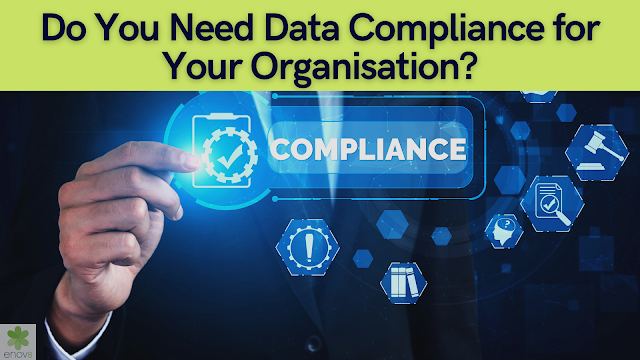
Do You Need Data Compliance For Your Organization
Image
  Imagine having a nice Friday morning. You're enjoying your favorite coffee, sitting in a car, heading towards your office, and making plans for a golf game with friends. Suddenly, your phone beeps with messages, and your whole weekend plan comes crashing down.  A ransomware attack has exposed your customers' sensitive data, and now you need to develop strategies to repair the damage.  To avoid such nasty situations, data compliance was introduced. So what's data compliance, and why they're incredibly important for your business? Let's find out! What Is Data Compliance? Data compliance encompasses following different regulations and security standards to maintain the integrity and availability of data you use for your regular business operations.  Data compliance standards focus on protecting sensitive data or personally identifiable information (PII).  Such information can identify a person directly or present someone's characteristics. Sensitive information ...

How to secure your sensitive data?

Image
  Every organisation stores a lot of data in its system, and data protection is necessary. With the rise of technology, data security threats are also increasing. Thus, companies need to be extra protective of their data. Companies also need to comply with all the necessary regulations of the state, and for this purpose, you can use data compliance solutions in your company.  Today, data is very important for everyone; many people term data - the new oil. You may have stored client data, customer data, and important company data. As a company, you are responsible for protecting all this data.  Apart from data security, data compliance is also very important; there are many compliances that you are abiding to follow. For instance, if you deal with financial information, you need to follow the Payment Card Industry (PCI) regulations.  In recent times, we have seen an increase in data theft, hacking, cyber-attacks, etc. It is important to prevent all these attacks; oth...

Do You Need A Release Management Plan?

Image
  Let's say that a team of developers is working on a new software product. After months of designing, coding, and testing, the product is ready for its first release. You know this software will be a hit in the market.  You've researched your competitors and target audience and prepared a marketing strategy. Now it's time to release this new software to the market.  But how? You can't just hit "Go" and hope everything works fine. There are numerous elements to consider prior to releasing a product. This is where a software release management plan comes into action. What Is a Release Management Plan? A release management plan is a crucial part of the software development process. A release plan consists of documented processes, people, tools, and workflows to guide the entire team in the various stages of application development, from design to re-design, testing, and deployment.  It also gives them an insight into what they can expect in the future and how t...

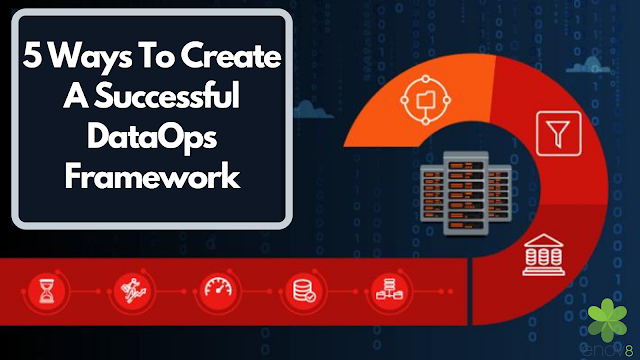
5 Ways To Create A Successful DataOps Framework

Image
  DataOps is an evolving approach to managing data. What if you had a streamlined technique like DevOps for data processing and management?  Thankfully, there is! DataOps framework .  DataOps, short for “data operations”, is an automated, process-oriented methodology to improve the quality and reduce the end-to-end cycle time of data analytics. Analytics and data teams are increasingly using the DataOps framework to produce high-quality data faster.  This article will discuss 5 ways to create a successful DataOps Framework. 5 Ways To Create A Successful DataOps Framework Embrace The Data Literacy Culture Data-driven results give you a competitive advantage. But before you start leveraging data, you’ll need to understand what types of datasets already exist within your organisation and how they are processed and utilised. This process is known as an audit.  An audit enables you to determine an organisational benchmark of current data use and provides an opportuni...

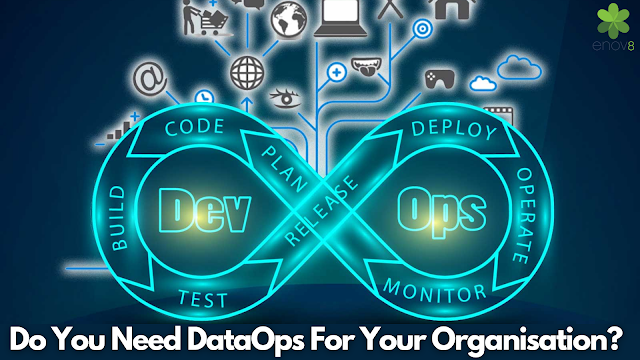
Do You Need DataOps For Your Organisation?

Image
  With data becoming the backbone of any industry, managing overwhelming volumes of data, intricate data processes and adhering to data compliance protocols has now emerged as a challenge.  Enter DataOps!  DataOps focuses on fostering collaboration between your data analysts and engineers, tools teams and operations to support a model of a truly data-driven organisation.  Are you planning to implement DataOps principles with your organisational workflow? Want to understand the scope of Data Ops in depth for better integration? You’ve just landed at the right place! In this article, we’ll discuss the role, importance and best practices related to DataOps.  Regardless of the industry or DataOps principles you adopt, ensure hiring an experienced DataOps company for optimal outcomes. Understanding The Concept Of DataOps Framework  Many misconceptions have painted DataOps as a magical tool that can vanish all your data problems. Or that the DataOps approach is ...

A Comprehensive Guide To Data Compliance

Image
  In the current digital era, businesses belonging to almost every industry hold tons of data. With such incredible amounts of data, a huge raft of responsibilities ensues. When you process data, you are responsible for how you store, share, use, and protect sensitive information as a business. And that’s where data compliance solutions come into play.  The right to privacy is considered an essential human right. Therefore, for safeguarding this fundamental right, most countries, governments, and industries integrate Privacy into regulations such as HIPAA, PCI-DSS, GDPR, CCPA, etc.  However, as an organisation dealing with a vast range of data sets, you might find dealing and complying with the increasingly stringent regulations more and more challenging. The diversity in communication channels and increasing collaboration with 3rd party agencies make the process of data compliance even more diabolical.  If the data used in the testing, production, and quality analys...

5 Best Practices For Test Data Management

Image
  Modern application development practices leverage the cloud features and benefits. However, these modern practices add unique hurdles that require certain standardised governance for test data practices. Cloud functionality has empowered DevOps teams with incredible flexibility in software development. With code infrastructure and automated CI/CD pipelines, your development teams can achieve repeatable software delivery processes for enhanced efficiency in workflows and improved productivity. However, test data management has failed to evolve with the modern agile techniques of application development. The outdated waterfall test data management approach negatively affects the release speed. In fact, the modern cloud application development methods increase complexity in outdated data management techniques.  Get the best professional services for TDM and IT portfolio management to reduce organisational bottlenecks and deliver high-quality applications on time.  The dat...

Potential Reasons To Adopt The DevSecOps

Image
  Web applications are the foundation stones of every organization. For scaling the growth high, it is a must to adopt innovative ways. There are some striking ways to get incorporated into the software industry. Every software industry is prompting to accelerate software releases. The motto of a software company is to secure the work structure. Every organization considers security as a challenge and finds the best way to handle it. Next, combining the rule of speed and safety is a simple task to do. So, in terms of security, there are some innovative ways. One such defined measure is the DevSecOps . Trace The Competition The IT competitiveness is in progress. So in every phase of the software development, the security goals are prioritized. Business practitioners are looking for innovative ways to incorporate security. It is equally vital to keep the codebase safe. Precisely, the new practice aids in the management of developing apps. The creation of the ‘Security as a code’ is p...

What is the importance of data compliance?

Image
In recent years, data compliance is the new buzzword we hear in the digital sphere and for all the right reasons. Businesses collect a huge amount of data from customers from various sources and data compliance is all about using this data responsibly and adhering to different state and local authority data compliance guidelines.  What is data compliance?  Compliance is nothing but a set of rules and regulations that you need to follow to save yourself from any legal troubles. Data compliance is nothing but a set of rules and regulations that companies need to follow to safeguard the data they receive from their customers, employees and other stakeholders. Companies must ensure various security measures to ensure that the data is safe and secure. Different countries have different data compliance rules and regulations, but generally, they cover five most important areas: Audit, Controls, Accreditation Confirmation, Regulatory and Legal Compliance.  Comp...

Data security and data compliance: Is There Any Connection Between Two?

Image
We all are familiar with the European General Data Protection Regulation (GDPR), which was implemented from May 25th, 2018. Other countries followed the footsteps of the European Union and came with their own GDPR-like regulations and data compliance became the buzzword across the globe.  The main aim of the GDPR was to impose regulations on how the data collected by the organizations can be used.  However, most of the countries remain noncompliant to GDPR and let me tell you, it is not easy to be a GDPR-compliant organization. For example, in 2019, Google received the $57 million fine for violations of the GDPR clearly shows that even bigger organizations at also struggling to adhere to GDPR compliance regulations.  You will not believe that many non-EU companies have closed their business operations from the EU market. Unfortunately, this is not a long term solution as more countries and states are coming up with GDPR-like regulations and you cannot wi...

Role and Benefits of DevSecOps in Modern Developing Culture

Image
A Brief about DevSecOps and DevOps DevSecOps DevSecOps is a practice that focuses on the application of security fundamentals to the basic working of the DevOps cycle by security teams, cooperation between the engineers, and other personnel-related to the developing procedure. DevSecOps and DevOps are not different concepts. In fact, DevSecOps is a succession of the DevOps function. It also enforces the idea that every team is responsible to take the security measures in their working. Compromising on the security can result in the failure of software as well as deterioration of the brand name.  The ultimate goal for the new businesses is to get new code out of production as fast as possible. However, it is vital for any company to keep a balance between production outcomes and security checks. DevOps DevOps includes a set of strategies pertaining to tools and techniques that allow teams to produce better and much faster code....