Posts

Test Data Management: A Efficient Way To Deliver Superior-Quality Applications

Image
Test data management is a process that helps you manage your software development lifecycle (SDLC) by providing access to test data for testing purposes. A test database collects data for testing purposes, including sample data and mock objects. The database is often created during the SDLC stage, during which you set up your development environment and begin creating code. It's key to ensuring that your software is tested thoroughly and reliably and passes the tests with flying colors.  Test data management includes keeping track of what you're testing and how you're testing it. It's also about ensuring you have enough time to test your software and that you have all the tools necessary to do so effectively. Why Can You Not Use Production Data For Testing? To keep production data secure and confidential, it is prohibited to use it for testing purposes.  This means that any testing process must be conducted using test data only (unless using production data is absolute...

Scanning in DevSecOps: A Detailed Guide

Image
DevSecOps is a way of approaching software development that puts security and stability at the top of the priority list. It's about ensuring that your code is secure from the start and then continuously improving it over time to ensure it stays secure. DevSecOps represents a set of practices that aims to automate software development's security process, including creating automated tools for testing and scanning applications. How is DevSecOps Different from DevOps? DevSecOps is a way of working that uses DevOps principles and practices to secure software. It's about creating an environment for developers and security professionals to work together to create secure products. DevOps is a set of practices focusing on automating processes, creating repeatable workflows, aligning development teams with business needs, and increasing efficiency through automation and software release management tools .  DevSecOps takes these concepts further by focusing on security as well. DevO...

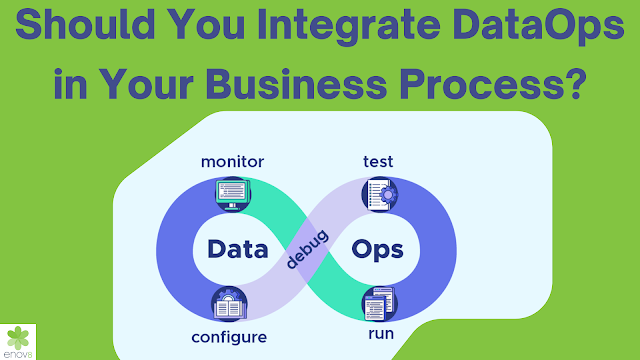
Should You Integrate DataOps in Your Business Process?

Image
  Data is the lifeblood of any business. It holds information about customers and their behaviors, products, and services. It's also the lifeblood of any enterprise — it's what keeps the lights on, keeps employees productive, and helps companies stay ahead of their competition. And DataOps can make data management more efficient! The Challenge With Data Management  In the realm of IT, many different types of data need to be managed- from operational data (like user logs and system metrics) to transactional data (like payment records).  But as you can imagine, data is a complicated thing to work with: it's often distributed across multiple systems; it has to be processed in real-time; it's constantly changing in size and scope—and that's to name a few examples! If you have too much information floating around in your organization, you'll have trouble finding patterns and making sense of it all. That's when data gets confusing; it's not just hard to kee...

A Definitive Guide To Release Management

Image
Whether you're new to release management or an experienced practitioner, Release Management is one of those topics that everyone seems to struggle with at some point.  IT release management is a part of the whole process of managing release management software , hardware, and applications. It helps in the successful delivery of software projects for IT organizations.  What is Release Management? Software release management encompasses the process of managing the delivery of software from development to deployment.  The release management process involves a series of steps that an organization goes through to ensure that there is no gap between the time a product/service is developed and delivered to customers. The four main phases of software release management are: Pre-release phase - The pre-release phase starts with planning for the release, which includes identifying what needs to be fixed or added before it goes live.  Pilot phase - In the pilot phase, the n...

DevOps Services and Solutions: A Comprehensive Overview

Image
  DevOps is an advanced approach to software development that amalgamates development and operations. It eliminates siloed mindset and unites people, processes, and technology during software planning development, delivery, and operations.  With DevOps services and solutions , you can easily e bridge the gap between IT operations, quality engineering, and quality assurance teams.  Enterprises incorporate DevOps practices, techniques, and tools to  improve workforce collaboration,   increase confidence in the developed applications  better respond to customer requirements and  achieve business goals faster .  DevOps software release management tools help teams consistently provide value to end - users by producing better, more reliable products. DevOps and The Application Lifecycle The DevOps application life cycle can be categorised into four segments: Planning,  Development,  Delivery,  Operations.  Every stage has ...